Book #41 – Mugabe and the White African

Prompt – A fiction or non-fiction book about a world leader.

Medium – Book

About the Book – Written by Ben Freeth, and based on the BAFTA nominated documentary, this book investigates the Land Seizure Programme instigated by Robert Mugabe in 2000, from the point of view of one family. The Land Seizure Programme sought to remove the land and property of thousands of white farmers, through the use of illegal means, including torture, rape and murder. Many white families abandoned everything and left Zimbabwe in fear of their life. However, Ben and Lynn Freeth and their children, together with Lynn’s parents and brother determined to stay in the lands that had been their home for so long, and mounted a legal opposition to the seizures and particularly to Mugabe, through the international courts. However, they were not unscathed in the resulting backlash against them.

My Rating – 6/10. The first thing to say about this book is that the subject matter is extremely important. Racism of any kind is disgusting, and the atrocities which were wrought in Zimbabwe and in other areas of Africa (including Apartheid in South Africa) were truly horrific. Freeth describes the way the white and black farmers and farm workers were tortured and killed in chilling but necessary detail. From Freeth’s own sister-in-law who caught malaria from resettled farmers and died whilst pregnant with twins, to the farmer who was shot and left to die with his little dog next to him, Mugabe’s land seizure programme, and the violence that was mandated alongside it, was horrific. It enriched the rich ruling class, whilst impoverishing the white farmers and the black majority. Freeth is a strong Christian, and I found his sure and certain faith in the face of such evil inspiring. His father-in-law’s resilience and ability to forgive the men that had beaten him almost to death was something I take away from this book with clarity.

So, why, if the subject matter of this book is so excellent, and important, am I only giving this book 6/10? There are two main reasons, neither of which have anything to do with the core content of the book, but both of which affected my reading enjoyment. Firstly, this book seriously needed an proof-reader. There are a number of grammatical, spelling and punctuation errors, which being a bit of a pedant, made me lose track of the important bits of the text. Secondly, the book seriously needed an editor. There are several chapters which include in depth legal jargon and the infighting in a series of different groups – none of which really, in my opinion, added much to the book. I think finally, it’s just a matter of choice. I wanted to read this book and I am glad I did. But did I enjoy it? No. It’s a good depiction of what happened, but in comparison with other books I have read this year, it wouldn’t be my first choice to pick up and read again.

Would I read it again? Probably not, see above! I have passed it on to my husband though.
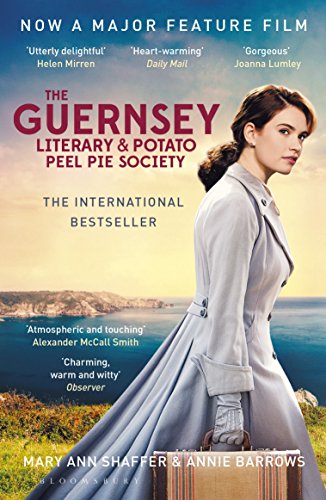
Book #40 – The Guernsey Literary and Potato Peel Pie Society

Prompt – A book about a book club

Medium – Book

About the Book – It is just after the end of the Second World War, and Juliet Ashton is a thirty-two year old writer living in London. She has writer’s block and is looking for her next topic for a book, after writing light-hearted parodies through the war time. She is contacted by letter by Dawsey Adams, who lives in Guernsey and enters a letter correspondence with him and with the other members of the Guernsey Literary and Potato Peel Pie Society, which was set up during the German Occupation. Through letters between Juliet and a number of her friends, the story of the society and a young woman called Elizabeth McKenna arises, and Juliet begins to fall in love with Guernsey and its people.

My Rating – 10/10. I started this book about 24 hours ago, and have just finished reading it. In my opinion, it is everything a book should be – both funny and incredibly touching. The book is written entirely in letter form, as well as in the form of a diary entry right at the end. Despite this, you really get to know the characters – including ones you don’t necessarily ‘meet’, like Sophie (Juliet’s best friend) and Elizabeth. The main character, Juliet, is both funny and extremely likeable and as many of the letters are by or to her, her character is one that the reader gets to know extremely well. That’s no bad thing as she is one of the most interesting and enjoyable characters that I have read about. Despite the fact that we never hear her voice, Elizabeth McKenna is also a prime character within the story, and one that seems to permeate the pages despite her absence.

The author also sets the scenes within the book beautifully – I desperately want to visit Guernsey now, just for the joy of walking in the places where Juliet did. The story overall is engrossing (hence the 24hrs read time!) and does not wallow in the terrible nature of the occupation, but instead adds humour and joy to even that most horrible of situations. That isn’t to say that the book isn’t respectful of what happened – you are never in any doubt that the author has done her research, talked to survivors, and cares deeply about what happened on the Channel Islands in WW2.

Would I read it again? Yes, definitely. It’s just a shame that the book needs to be returned as it is my mother’s!

Book #39 – The Fall of Gondolin

Prompt – A book published in the month of your birthday (August – yippee!)

Medium – Book

About the Book – Christopher Tolkien edits his father’s manuscripts and notes to bring together the story of the fall of Gondolin, the High Elven city of the First Age of Middle Earth. The story is presented as a first draft and then after as newer editions and redrafts which added more information to the story and about the characters. At the end of the book, Tolkien provides additional notes about the supporting characters of the story, including Earendil, the father of Elrond of Rivendell and the namesake of the phial of light that Frodo uses against Shelob in the Lord of the Rings (yes, I know if you haven’t watched Lord of the Rings that will be complete gobbledegook!).

My Rating – 6.5/10. It really pains me to rate this book no higher. I love Lord of the Rings, the world of Middle Earth and the writings of J.R.R. Tolkien. I even have the series of background information books that the Tolkiens developed to give more information about the world. Whilst I know Tolkien’s writing style isn’t for everyone, I quite enjoy it. And I’m a massive fan of the films. But, I think the problem with this book is the multiple incarnations of the story that are presented, all of which are good, but which makes the book extremely repetitive. To be honest, you could just flick through to the original tale, ‘the last version’ and the story of Earendil at the end of the book. I mainly skimmed through the other bits.

If you are a big fan of Middle Earth, it is definitely worth the read. It’s an interesting dive into the culture of the Elves and their last hidden city, as well as foreshadowing elements of the main Tolkien works beautifully. The one main female character, Idril, is great – she’s wise and a fighter and she is listened to by the main male character in the story (which makes a change!) The illustrations by Alan Lee are absolutely beautiful, and I would probably have the book just for those. It’s an atmospheric, enjoyable sojourn in Middle Earth, but it is very unfinished (especially the ‘Last Version’, which is a shame as it is the best of the bunch!) But, having read other books which provide a background into Middle Earth, I can’t say that this has been my favourite.

Would I read it again? Probably not – and its my dad’s book so might need to go back to him at some point!

Book #38 – The Wonders

Prompt – A book with the same title as a movie/TV show, but unrelated. There is a very arty Italian film called ‘The Wonders’ as well as the beautiful ‘Wonder’ film directed by Stephen Chbosky.

Medium – Book

About the Book – John Woolf charts the history of the ‘freak show’, from the performers of the Stuart period, right the way through to the modern day. As the freak show was most celebrated in the Victorian era (and popularised by Queen Victoria, no less), much of the discussion of these shows takes place between 1840-1900. The book talks through key figures such as ‘The Greatest Showman’ P.T. Barnum, ‘General Tom Thumb’ a.k.a. Charles Stratton and the conjoined twins Chang and Eng Bunker among others. Within the book, Woolf uncovers the often tragic lives of the circus performers and the differing attitudes they themselves had to exhibiting themselves.

My Rating – 9.5/10. I found this book eminently readable and fascinating, a really interesting insight into the world of the circus in the Victorian era. I really enjoyed Woolf’s style of writing and the way that he organised his chapters around the main characters for each act (which broadly covered the rise and then fall of the shows in popular culture). Woolf uses a range of sources, including lots of interesting portraits, pictures of handbills and photographs, and the book feels extremely well researched. Even more importantly, Woolf discusses each of his subjects with warmth and respect – whilst they are historical figures, they are also people – and often people who were exploited and taken advantage of in the most awful ways.

The book also delves in greater depth into the life of P.T. Barnum, who was played by Hugh Jackman in ‘The Greatest Showman’. Now, honestly, I LOVE the movie – the singing is amazing, the choreography is phenomenal and I have the smallest crush on Hugh Jackman. However, I have always tried to separate the Barnum of the movie from the Barnum of history. In real life, Barnum was extremely problematic. One of his first exhibits was a dementia-stricken elderly black lady called Joice Heth. Under Barnum, she was forced to perform for hours every day, transported all over America. She was publicised as the oldest woman in the world (161 years old), the nanny of George Washington and in order to make her look older, Barnum extracted her teeth by force. When she died, Barnum arranged for her to be autopsied in public so that people could see inside the oldest woman in the world (the doctor soon demonstrated that she was about seventy). And of course, he charged people for the pleasure…

Would I read it again? Yes. It’s also such a beautiful book in looks that I am displaying it with my other lovely looking history books!

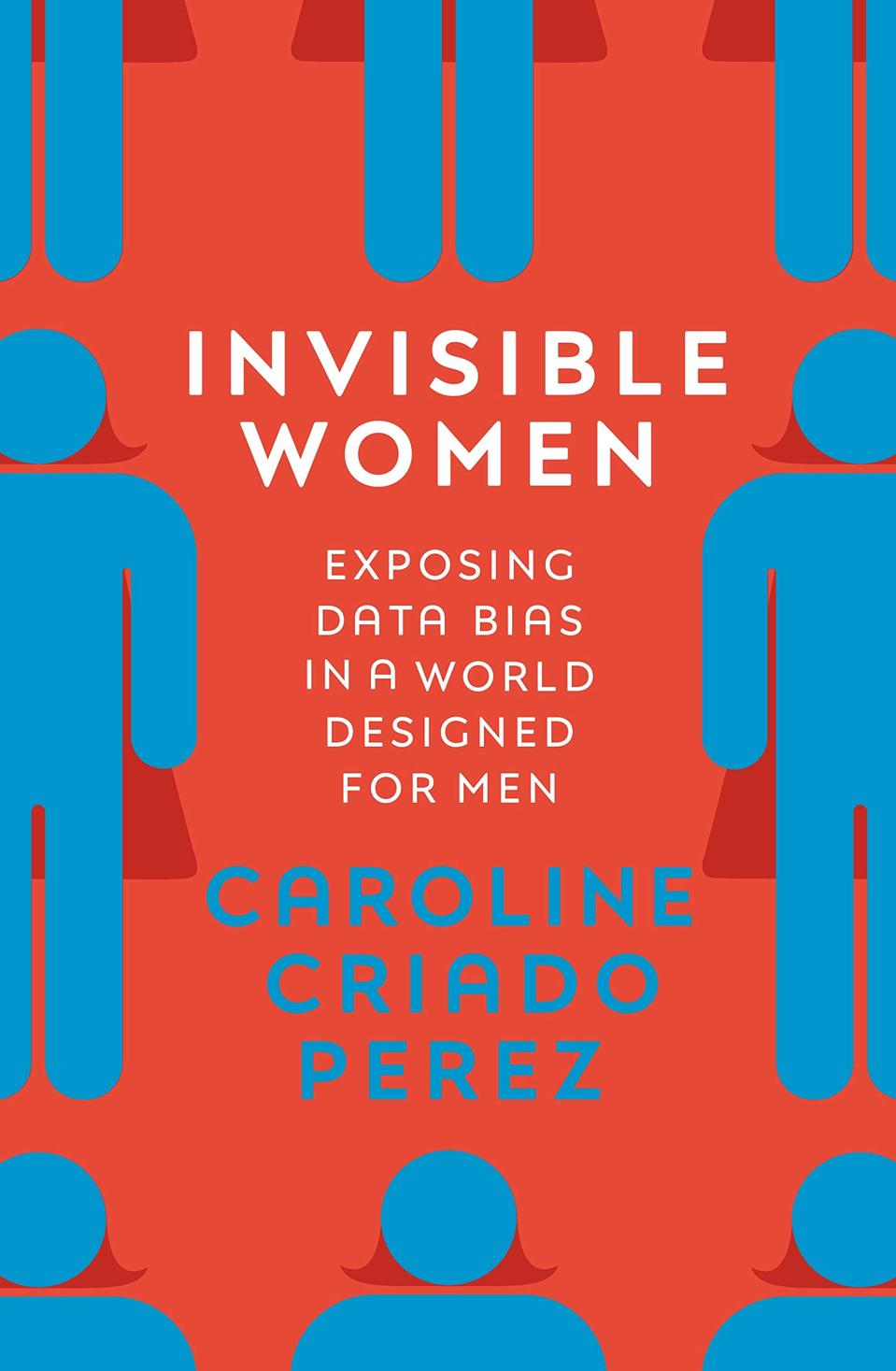
Book #37 – Invisible Women

Prompt – A book by or about a woman in STEM

Medium – Book

About the Book – Caroline Criado Perez discusses the nature of data bias in our male-focused world – by looking at up-to-date statistics and case studies, she investigates the data gap which exists because of the lack of communication and testing with women in mind, and due to the lack of discussion with women. The book demonstrates how the world is predominantly built for men (and generally white men), and how the data gap that she investigates has shown systematic sexism on a range of levels. Perez looks at a range of areas, such as in education, employment, design and medical advances and shows how a lack of female-orientated data is not only causing problems for females world-wide, but also for citizens of every country, whether they are male or female.

My Rating – 9/10. This isn’t the sort of book I would usually read – feminism, yes, statistics, definitely not. But I was pleasantly surprised and fascinated by this book, which investigated the gender gap with both humour and not a small amount of flair. It was also one of those books that I had to read in small doses, and then go away and kick a wall for a bit. The demonstrations of the data bias were infuriating, as was how easy it would be to fix the problems. One example, close to my heart – women generally do not go back into work and then progress at the same rate as men do after the birth of a child. Women can lose between £100,000 and £300,000 in their life time due to time out to have a child. However, women who want to returning to work would increase GDP, as women pay more taxes. In many countries, (male) politicians try and increase GDP and lower what they see as unemployment, but can’t work out how to do it. The answer (or at least the one Perez suggests)? Talk to women. Increase affordable, quality childcare and women will return to work. This increase in childcare facility will also boost available jobs, which will generally be taken by women. A win-win.

Another area I found shocking was the medical part of the book. Perez looks at things like medications and treatments and discovers another gender data gap. It seems that, in medical testing, there are often extremely few female participants in tests – most of the time test participants are young men. Many treatments that we have available now are not as effective on a female body and some that have been disregarded may work for women but were discontinued as they didn’t work on men. This idea of women’s bodies being just a smaller version of a man’s is a hangover from medieval time and does not take into account our very different physiology and anatomy. One point that stuck with me is that medications will often work differently for women depending on where in their monthly cycle they are. But there is startlingly little research into this – something which could be impacting female treatment, health and well being.

Would I read it again? Yes, definitely. I am also keen to pass it on to friends and family! It’s a book that really makes you think and I think it should be prescribed reading for any man who thinks that sexism is a myth.

Book #36 – Summer at Little Beach Street Bakery

Prompt – A book with a bird on the cover.

Medium – Book

About the Book – Polly Waterford lives on the beautiful Cornish island of Mount Polbearne, running the two little bakeries on the seafront. She lives in the beautiful lighthouse with her boyfriend Huckle and her very sweet puffin, Neil. However, everything is changing on the island – Polly’s boss dies leaving the bakery to her good-for-nothing nephew, widowed Selina moves back to the island (whose husband Polly had a fling with) and Huckle’s family responsibilities start to emerge. Soon, it looks like Polly is going to lose everything she loves.

My Rating – 7.5/10. This book is the second of two, but you don’t need to have read the first to enjoy the second. The story is quite sweet, a little slow to get started but generally a lot of fun! The story is nice and summery, with a beautiful setting – it made me quite sad not to be going on holiday this year. I found the main heroine likeable, but until about 80 pages from the end, a bit of a wet blanket. Her new boss is absolutely awful to her, and all I wanted her to do is to tell him to f*** off! She becomes much less timid by the end of the book, which makes her an all-round more pleasant character to read about.

I was a bit sad that the lovely bird, Neil, sort of disappears half-way through the middle of the story – seeing as he seemed to be quite a central character in the previous book, it was a bit odd that he disappears without trace for a bit. Otherwise, I thought the characters were well rounded and well developed. I liked the interjections of Selina’s therapist which appear sporadically through the novel – Selina is in some ways, a much more sympathetic character than Polly so its nice to have the inner thoughts of an altogether more go-getting character. But, it was a nice, sweet, gentle read, perfect for the slightly odd summer we are having!

Would I read it again? Probably not, I think it will be passed on to a friend or the charity shop!

Book #35 – Out of the Silent Planet

Prompt – A book with a made-up language

Medium – Book

About the Book – Ransom, a Professor of languages at the University of Cambridge, is on a walking holiday when he is kidnapped by an old school friend and flown to Mars (or Malacandra). When he is there, he manages to escape from his captors and make his way across the planets. On the way, he meets the Hrossa, the Sorn and the Pfifltriggi people, who all help him to get to the great and powerful Oyarsa, servant of Maleldil. Being a professor of languages, Ransom manages to pick up the language of the planet and is able to communicate with the creatures that he meets, as well as observing the creatures and starting to understand the beauty of their world and what they believe.

My Rating – 7/10. This book was written in 1938, prior to C.S. Lewis’s Chronicles of Narnia (some of my favourite books). It has, in some ways, similar features to the Narnia books – a human is transported to a new and ‘magical’ land, there are weird and wonderful creatures in this land, and a being (Maleldil), who is a representation of Christ. I did find this book less readable than the Narnia stories – I guess part of that is because this book isn’t meant for children! But also, the description of the planet did, at some points, run to paragraphs, which could get quite tiring to concentrate on.

The book also had surprisingly little action in the second half, but nevertheless, I found it a fascinating read. I’m not usually a massive fan of Sci-Fi, but this book kept me reading (if not necessarily gripped) all the way through. It has some nice parallels to the Narnia stories, which I enjoyed spotting. It is definitely a book ‘of its time’ – at one point one of the ‘baddies’ starts talking to the inhabitants of Malcandra in a tone, I suppose, a person of the time would expect to talk to a native tribe in. It’s fairly insulting, but the use of the tone is presented as very stupid and is not looked on favourably by the author, the main character or the angel-like being Oyarsa. It is not a book that I feel the same attraction to as the Narnia stories, but a fairly good romp, which I would recommend to Sci-Fi lovers.

Would I read it again? Probably not – I think it is going on the pile to give to my dad at some point!

Book #34 – The Girl Who Speaks Bear

Prompt – A book with a map.

Medium – Book

About the Book – Yanka is found abandoned in the wilds of Russia as a baby, snuggled in a bear cave. She is taken in by a kind woman from the nearby village, her Mamochka. However, she never feels like she fits in within the village – she is taller and stronger than all the other children of her age, and she starts to hear strange voices from the snow forest, calling her deeper and deeper to find her past. One day, she has to leave her house and runs into the forest, looking for answers about who she really is and what her path in life is. Within the forest, she encounters magical beings and builds a herd of extraordinary animals, as she realises that part of her quest is to vanquish a powerful evil.

My Rating – 9/10. This book wasn’t one that I planned on reading originally. I bought it as a guided reading book for one of my young students, and we read a chapter a session until she broke for the summer. By that time, I was so enjoying myself that I had to read on. I was super pleased that it had a map in the front and so worked with one of the prompts from the reading challenge. Although meant for children, the story is exciting and inspiring – the tale of a girl who doesn’t really fit in and her quest for acceptance and to find where she truly belongs. I really enjoyed the way that the main story was mixed in with traditional Russian-style folk tales. At the beginning of the story, it wasn’t really possible to see how the stories related to the main action of the book, but by the end it was clear that they were integral.

The story is really clever too – giving clues as to the final mystery throughout the book, but not giving it away until the very final few chapters. The characters are great – there weren’t any that I found myself not liking or found a bit irritating. I think the one word I would use to sum up this book is magical – a mix between an adventure-type story and a fairy tale, with plenty of excitement and joy thrown in. I would recommend for those of all ages, not just children. It’s set in a really magical world, and one which I am looking forward to returning to in the prequel and the soon-to-be-released sequel!

Would I read it again? Yes, definitely – and I will definitely continue to use it for teaching too!

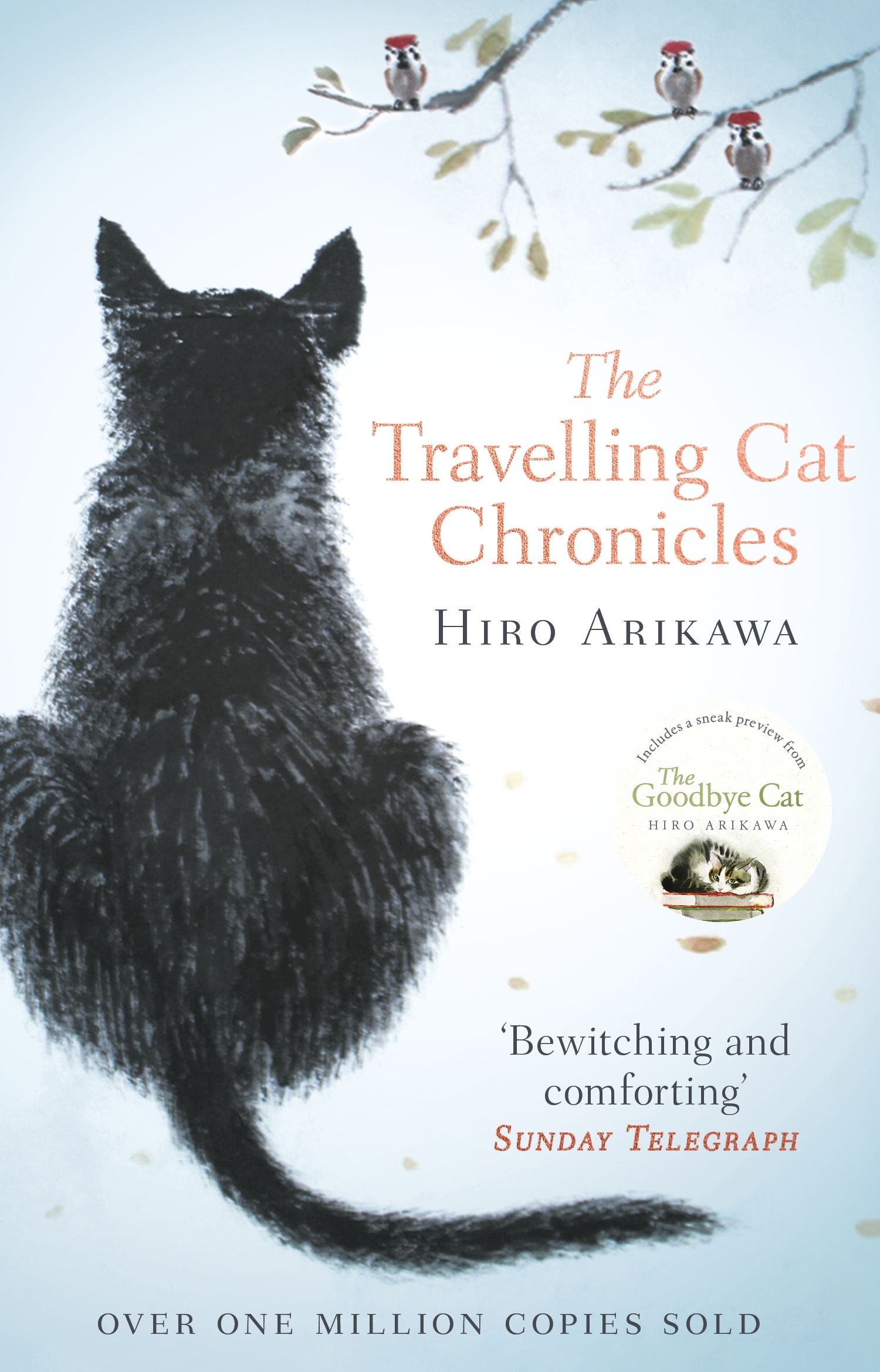
Book #33 – The Travelling Cat Chronicles

#

Prompt – A book set in Japan.

Medium – Audiobook

About the Book – This book is the tale of Nana, a stray cat who is befriended and rehomed by a young man called Satoru. The two live together peacefully and happily for five years, before Satoru decides to start travelling Japan visiting three sets of old friends from his youth, trying to decide which set should rehome his beloved Nana. The story is told both in the third person and through the eyes of the wonderfully illustrated cat – who is funny and just as I would expect a cat to sound if one could talk. Nana and Satoru travel Japan, seeing various parts of the country, and just enjoying each others’ company, as Satoru tries to find a new home for Nana, despite the cat’s determination that he won’t.

Rating – 9.5/10. Until fairly recently, I was very much a dog person. I liked cats – we had one and she was lovely, but I wished, with all my heart, for a dog. I still do really. But, with this book I have discovered a greater appreciation for cats than I ever thought I would – and yes, I know it’s a fiction book… This book is beautifully written and wonderfully translated. The audiobook version was lovely – each character (especially Nana) with their own unique voice and each as I would imagine hearing them. The voice of Nana in the book is superb. He is the very epitome of ‘cat-ness’, but with the deep love and affection I truly believe that animals feel for their humans.

I really enjoyed the mini-stories of the three sets of friends too – how their lives are intertwined with Satoru’s and how he has affected them through his life. The main storyline of Nana and Satoru travelling together is funny, enlightening and deeply touching – I especially liked the bit where Nana is on the ferry with all of the other cats and dogs. I also loved the way that the author slowly revealed the reason for Satoru wanting to give up Nana – it was extremely cleverly done and allowed me as the reader/listener to come to a slow realisation. This is one of those books you will read and weep through the ending of – but it is comforting and beautifully written. I would completely recommend it – whether you are a ‘cat person’ or not!

Would I read it again? Definitely. With a big box of tissues!

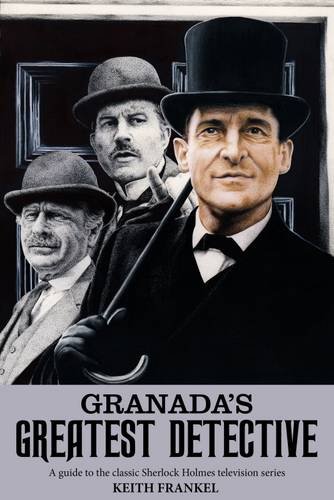
Book #32 – Granada’s Greatest Detective

Prompt – A book with a title with more than twenty characters

Medium – Book

About the Book – Keith Frankel tells the ‘behind the scenes’ story of the Granada production of ‘Sherlock Holmes, filmed in the 1980s and 1990s. The incomparable Jeremy Brett played the role of Sherlock Holmes, alongside David Burke (seasons 1-2) and Edward Hardwicke (season 3 onwards) as Watson. The book tells the stories behind the episodes, including the casting of supporting actors, the choices made with adapting the stories and the gradual decline of Jeremy Brett as he fought through mental and physical health issues. Each episode is examined in detail, with it being analysed in its contemporary and historical context.

My Rating – 8.5/10. I love Sherlock Holmes, and as much as I adore Benedict Cumberbatch’s portrayal of the detective, ‘my’ Holmes is the one played by Jeremy Brett. He was fantastic at taking the character and portraying him with all the quirks and eccentricity of Doyle’s character, as well as his inherent humanity. Similarly, ‘my’ Watson is the one played by David Burke and latterly, Edward Hardwicke – clever, kind and well-educated, with the spirit of adventure and the long-suffering but still feisty nature that the Great Detective would have appreciated. This book takes a look at each of the episodes in detail, and charts the rise of the programme from its heady beginnings to its sadly uninspiring end.

I really enjoyed the ‘sound bites’ for each episode from the cast and crew – those helped me to think about the people behind the programme, but didn’t take away the magic – in fact, I am looking forward to re-watching all the shows again to re-acquaint myself with the brilliance! I think the sound bites also allowed me to get a better feel of the actors as well – to see Jeremy Brett, for example, as his own man, rather than just as Holmes. The added inserts about the political context within the organisation were also fascinating, and gave lots of light bulb moments about why things were the way that they were in the adaptations (i.e. why the adaptation of the Hound of the Baskervilles is so (for want of a better term) shoddy and why they re-used clips in some parts of the programmes). I’ve knocked some points off because I think that some of the analyses of the episodes are too subjective. There are also a few spelling mistakes!

Would I read it again? Definitely – I have a lot of books about films and TV so the book is going straight in that collection!

Design a site like this with WordPress.com
Get started