Book #21 – Dead Famous

Prompt – A book with a great opening line.

Medium – Book

About the Book – Greg Jenner, who is a public historian, the historical consultant for ‘Horrible Histories’ and the presenter of podcast ‘You’re Dead to Me’ explores the ways in which the ideas of celebrity have been publicised and evolved since Jenner’s first identification of a ‘celebrity’ – surprisingly, a priest by the name of Dr Henry Sacheverell – to the 1930s (ish). The book starts with the tale of a truly remarkable, if problematic celebrity by the name of Edmund Kean and ends with the epilogue focusing on the ‘celebrity president’ Donald Trump, and the relatively new trend for Influencers. The book isn’t your usual ‘history book’ – there are plenty of jokes, funny stories and the book is written in a really informal tone, which makes you feel as though you are listening to Greg’s supremely funny podcast.

My Rating – 9/10. This book has been one of my favourite history books so far this year. Funny, but also engaging, it was the sort of book I could read for pleasure, but did need a fresh and clear mind for – hence taking a while longer to read. I really enjoyed the way that the author weaved the stories together – he doesn’t take a traditional chronological viewpoint on the history, but instead writes in themes – such as the emergence of fandom, the celebrity body and the financial reward that goes along with being a celebrity.

Jenner writes in a really clear and accessible way, covering both the desirable and undesirable parts of fame. One of the stories which really stuck with me was the horrible story of Evelyn Nesbit, the young (extremely young) model who was part of two violent and highly problematic relationships, which led to the ‘trial of the century’. On a more positive note, I really enjoyed the story of the music hall sisters who would sing the song ‘Would you like to see my pussy?’, before raising their skirts to show a set of kittens in each of their pairs of knickers. This is a fun book, and I thoroughly recommend it. The only reason that I have marked it down one point is because I believe some of the stories are a bit curtailed (I would like to have found out what happened in the end to Evelyn Nesbit), but on the other hand I do understand that the wealth of information available in this book means that things being left out are inevitable.

Would I read it again? It’s going back on the shelf, my mum is borrowing it next time she comes around and dad’s in the queue after her, so probably!
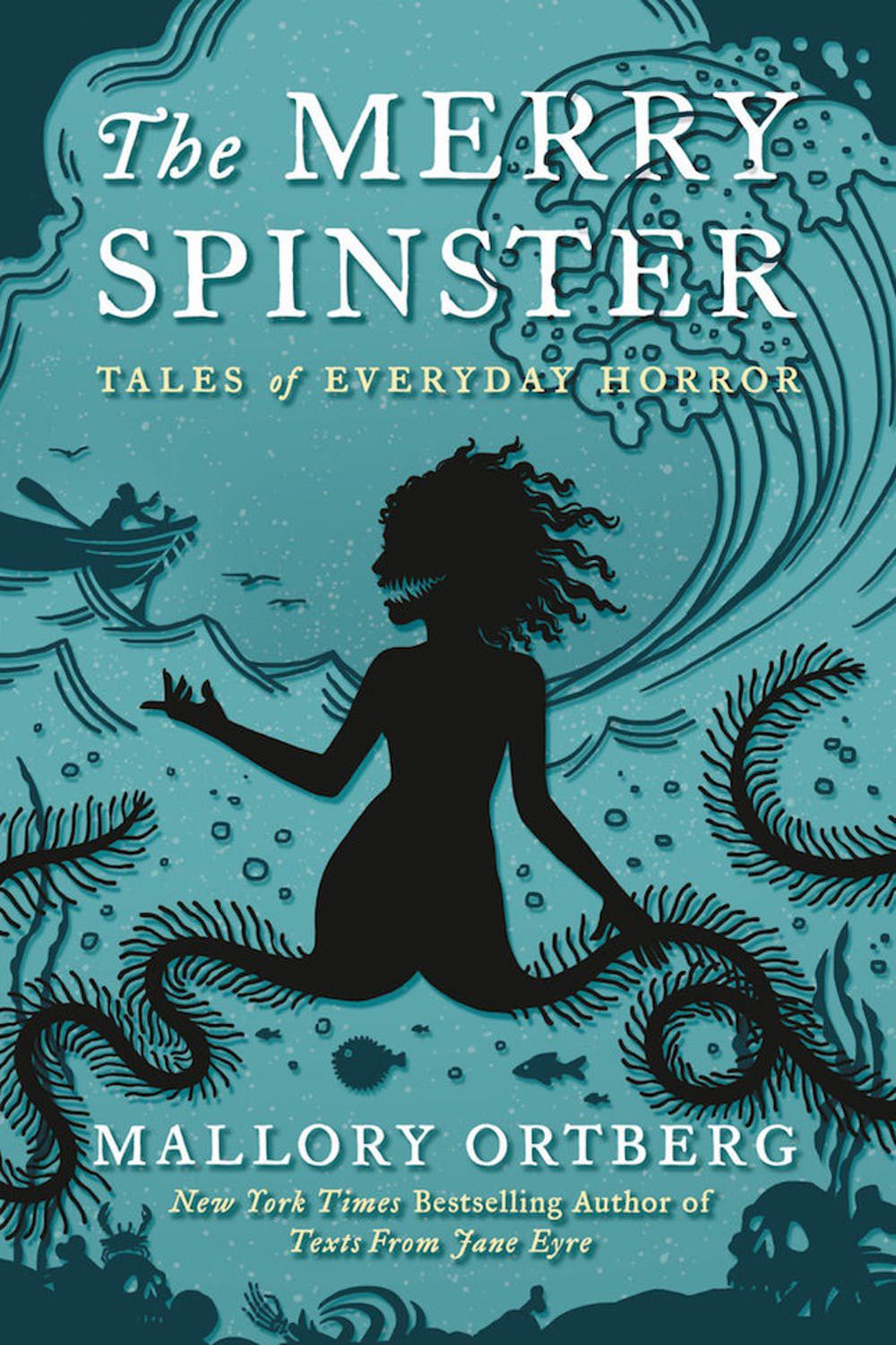
Book #20 – The Merry Spinster

Prompt – A book written by a trans or non-binary author.

Medium – Book

About the Book – Daniel Mallory Ortberg re-imagines a series of classical ‘bedtime stories’ as dark and slightly creepy tales. The stories include psychological horror, emotional upset and feminist additions to create new plots and twists to some of the most familiar tales, such as ‘Cinderella’ (where the main character is haunted by a weird ‘godmother’), ‘Wind in the Willows’ (where Ratty and Mole gaslight Mr Toad) and ‘The Little Mermaid’ (where the little mermaid does not quite understand what humans need to live). Weird in places, but funny and sinister, some of the stories come to quite satisfactory endings, whilst others leave you hanging on the edge of a precipice.

My Rating – 8/10. This book was one I was a little leery of when I first picked it out to read – the reviews on the back of it using words such as ‘dark’, ‘dreadful’, and I’m sure I saw ‘horrifying’ somewhere, made me wonder if it would be a bit much for me – I have a particularly low tolerance for horror. But actually, I really enjoyed the stories. They were creepy without being ‘jump-scary’ and had enough darkness to make them interesting rather than haunting. Bearing in mind I got through it in 24 hours, I think that probably tells you as much as you need to know about how gripping and enjoyable I found the book.

I found the stories varying in the degree to which I could readily understand them – I think some of them were a little high-brow for me! I really enjoyed the feminist take on the Grimm’s ‘Six Swans’ and ‘The Twelve Brothers’, which was a fantastic story that I really enjoyed reading. Others that I enjoyed were the very creepy ‘Little Mermaid’ re-imagining and the slightly bloody ‘Johnny Croy and his Mermaid Bride’ re-write, all of which I found to be gripping. A couple of them were just a bit… strange, and I found the ones which involved emotional manipulation and gaslighting quite difficult to read. However, all in all I enjoyed the book and would definitely recommend it if you want a slightly scary read.

Would I read it again? I’m definitely keeping my copy, yes! I liked the ‘short story’ nature and could see myself picking it up for just one or two of the stories.

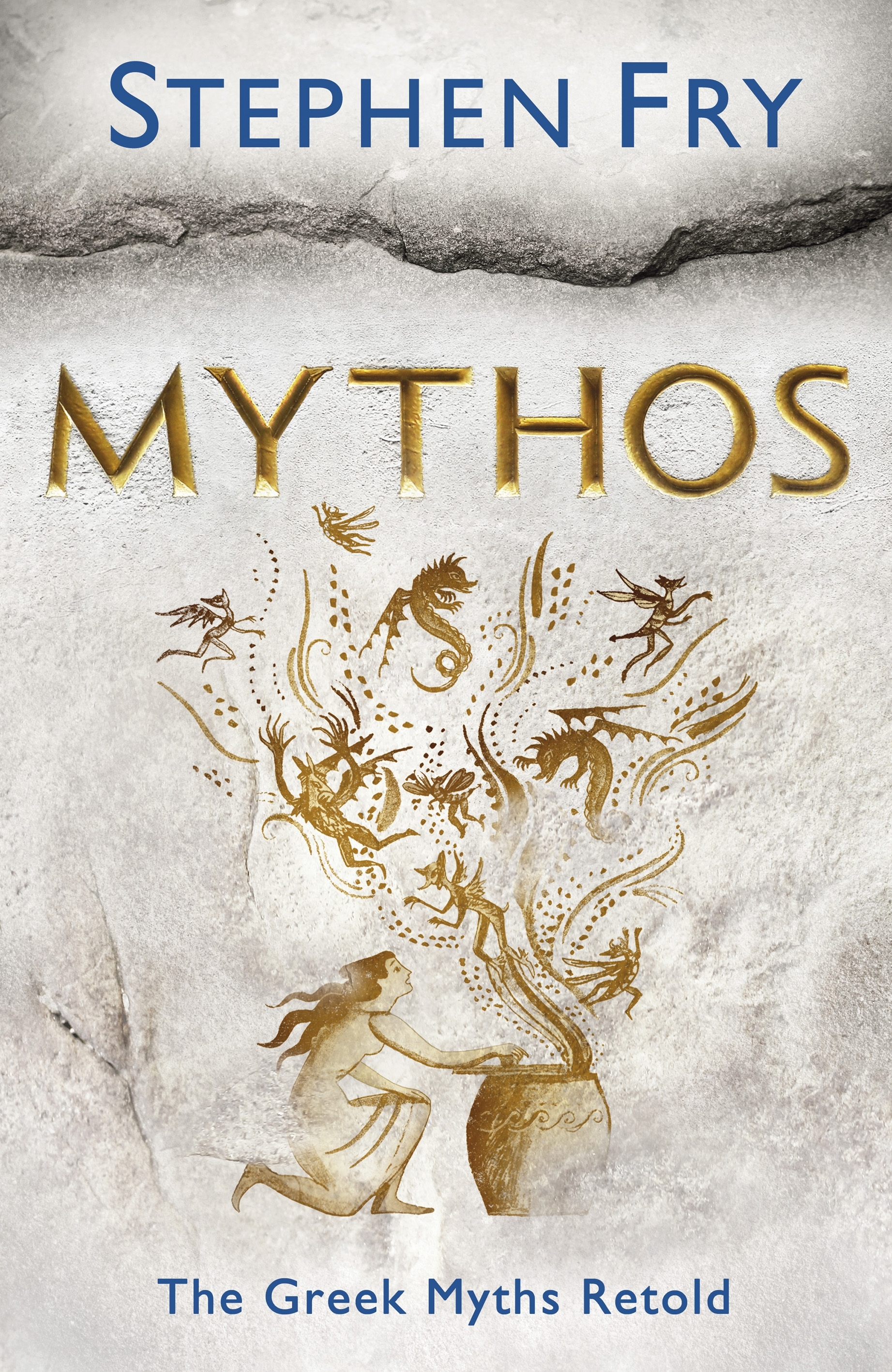
Book #19 – Mythos

Prompt – A book by an author who has written more than 20 books. Including books of screenplays, Stephen Fry has!

Medium – Audiobook

About the Book – Stephen Fry takes us on a whirlwind tour of the Greek myths, starting from the very dawn of time, right through the arrival of the Gods on Mount Olympus and to the beginnings of the Age of Heroes (followed up in the next book ‘Heroes’). Fry introduces the characters – Titans, Gods, Demi-Gods, Immortals and Mortals – with their own unique voices and characteristics. He talks through each of the Gods in turn, before discussing the many adventures they get up to. Part mythological academic text, part narrative, the book introduces Greek history in a way that is accessible to everyone.

My Rating – 10/10. OK, confession time – I love this book. I was desperately happy to find Stephen Fry had written 20 books, so I could cast aside ‘Pharaoh’ and take up this one instead. This book is funny, touching and engaging, with equal parts history and comedy text. Fry writes dialogue between the characters which is uniquely ‘Fry-ish’ in tone – plenty of sarcasm, word play and quick wit. Each of the characters you meet have their own character – Zeus, the arrogant and yet sympathetic playboy; Hera, who reminds me inescapably of the Aunts from Jeeves and Wooster; wise Athena; tricky Hermes; touchy Artemis; clever Apollo – to name but a few. The stories are presented cleverly, in sections, and never get confusing, even when the characters have similar names.

Greek myths are some of my favourites, and although I am happy to listen to academics talking about them, I really enjoy Fry’s light-hearted and yet deep take on them. I was lucky enough to catch his talk at the virtual Hey Literary Festival this year, on his next book, Troy, and it was great to hear about his creative process, as well as hear about his new book coming out in October. I heartily recommend this book – and must put in a special plug for the audiobook. There is something incredibly special about hearing the author reading his own book, with expression, humour and panache.

Would I read it again? Without the shadow of a doubt!

The book I couldn’t finish

As an interlude – here is a book I just couldn’t bring myself to finish – ‘Pharoah’ by Wilbur Smith. Now I know this may be an unpopular opinion – apparently the book is a Number 1 bestseller and lots of people love it, but I just could not fathom it.

I love historical fiction as much as the next person – I am a massive fan of ancient history, but this just seemed like really badly written ancient historical fiction. I think the first mis-step for me was that on about page ten, I had to get a pen out and start correcting the punctuation. Being a teacher, that sort of thing really bugs me – I know it’s not the author’s fault, but I honestly believe there is a special place in hell reserved for people who publish books with spelling, grammar or punctuation mistakes. Just grrrr….

My second annoyance with the book was the gratuitous violence – but also the lack of it. Let me explain. On one page, the author describes the fate awaiting pregnant females who are tortured by the disgusting new King in quite some detail. On the next, he glosses over the fate awaiting our imprisoned hero with ‘terrors too horrible to mention’. So which is it? Lots of violence, or some glossing over?

Another thing that bugged me is that the conversation just seemed really stilted. No one seemed to talk properly to one another. The main character, who I think was meant to be appealing and heroic just wasn’t – he seemed to spend lots of time admiring himself, talking in cliches and recalling things that had happened in previous books, without explaining what those things might be in enough detail for me to feel connected to the character. In short, I think I lost the will when I got to page 60(ish) and encountered the line “Then I introduced him to my magic fish.” I think it was that line that made me decide it wasn’t for me.

So, I have chosen another book for this prompt – one that I know I enjoy and can get behind. Funnily enough, it is also about ancient history…

Book #18 – All the Light we Cannot See

Prompt – A book with a character with a visual impairment (a nod to 20/20 vision).

Medium – Book

About the Book – Anthony Doerr writes through the use of short scenes and varying time periods about two young people living through the war years. Marie-Laure is a blind French girl who is living in Paris with her father, the master locksmith at the Museum of Natural History. When the Germans look to be taking control of invade Paris, they flee to St Malo where Marie-Laure’s uncle lives. Without her knowledge, her father carries with him a dangerous and priceless diamond, which is being hunted by Nazi treasure hunters. Werner is a German orphan who has an affinity with maths and all things electrical, especially radios. He becomes an expert in building and fixing radios, and is enlisted to track down those using radios in the resistance. Marie-Laure and Werner’s interweaving lives come together to show that even in the most difficult situations, people can still be good to one another.

My Rating – 8.5/10. This book was in some ways very similar to the non-fiction book about ‘Auntie’s War’, as it covered, in depth, the use of radio and radio transmission in the war and why it was so important. It was interesting having this insight so soon after reading a non-fiction book about radio as it really brought home the uses of radio as well as the risks of using it in war-torn France. The style of the book was really interesting – very different to anything I have read before. Each chapter was sent in a different time period, so you would go between the start or end of the war with every new chapter. As the main action of the story approached, the two timelines ‘met’ as the main characters did. Within each chapter, there were a number of 2-3 page mini-stories, told from the point of view of Werner and Marie-Laure, as well as other characters such as the Nazi treasure hunter, Marie Laure’s dad and Werner’s sister.

As well as a really interesting style, I really liked the two main characters. Marie-Laure was written as brave, clever and resilient – whilst she is blind, she plays an active role in the resistance. Doerr writes her character fantastically – you never forget that she is blind, but she finds ingenious ways around the situations she finds herself in. Werner is completely sympathetic, a fiercely intelligent young man who never fits into the Nazi ideal and who, though sucked in at the beginning, comes more and more to become disenchanted by the Nazi propaganda machine. The ending of the story (without wanting to give any spoilers) was bittersweet and chilling. In particular, the scene at the end of the story with Werner’s sister was particularly harrowing.

Would I read it again? I am not sure. I think it is one of those books you enjoy, but only read once, so will probably be passed on when the charity shops re-open. I’ve also had a bit of a run of Second World War books, so I’m going to try something else for my next read.

Book #17 – The Eyre Affair

Prompt – A book with a book on the cover

Medium – Book

About the Book – Thursday Next is a literatec (literature detective) in Special Ops in an alternate version of the UK. The book is set in the 1980s, where England is a republic, technology in some realms is not as advanced (i.e. they have airships!), there are time-travelling policemen, vampires and werewolves and where books and literature is significantly more important in day-to-day life than it is in this world. Thursday begins the book working in London for SO-27 (the literature crime department), before transferring to the same department in Swindon, where the majority of the book takes place. The main storyline in the novel involves the heroine pursuing a dangerous and demonic master criminal through the world of Charlotte Bronte’s ‘Jane Eyre’.

My Rating – 9.5/10. I really enjoyed this book. I was not necessarily sure going into it, as I’m not a massive fan of surrealist literature and my husband had not enjoyed the series when he had read it, but I loved it! Some of the things I really enjoyed were:

  1. The puns and in-jokes in the naming of characters, such as Landon Park-Laine (Land on Park Lane, like in Monopoly!).
  2. All the links to classic literature – Jane Eyre, obviously, but also some of Dickens’ work, Shakespeare, poets.
  3. The ‘alternate’ nature of the setting – I love anything Steampunk, so that was a big winner, but also the clever little twists which made the setting close to our world, but not quite.
  4. The comedy – I found this book in places really funny.
  5. The main character – Thursday is fantastic. An ex-soldier, a special ops agent, she is always heading into danger and always ready with a quick quip. She is also very relatable – she suffers an accident early in the book and talks about how she cries a lot in private, which is very un-like the strong female characters you sometimes read about.
  6. The storyline – I just liked the cleverness of it. The loose ends for the next novel, the clever ‘Easter Eggs’ for other books and the ways that it all came together in the end were great.

Would I read it again? Definitely. I’ve already added the next books in the series to my ‘read in the future’ list!

Book #16 – Seven Endless Forests

Prompt – A book published in 2020.

Medium – Book

About the Book – Written as a accompanying novel to April Tucholke’s ‘Boneless Mercies’ (which I haven’t read!), this book tells the story of Torvi. She is a young woman who has recently lost her mother and lover to a plague (which seems very apt at the moment) and is trying to protect her younger sister Morgunn. Despite her best efforts though, Morgunn goes missing, kidnapped by the ‘Wolf-Priests’ who roam the world burning towns and villages, looking for young women to turn into priests. Torvi meets a druid, Gyda, and three Butcher Bards, Ink, Madoc and Stefan to help her find her sister.

My Rating – 8/10. I really enjoyed this book, though it is one of those that definitely improves in the second half of the story. The storyline was really engrossing as the characters move closer and closer to their goal, and the characters of Torvi, Ink and Madoc in particular were ones that I enjoyed reading and wanted to know more about. The various characters and groups of people could have been a bit confusing, but actually the author introduced them in such a way that you generally know who is who and what they are doing or what group they are with.

I think there could have been more back-story for a number of the characters, especially those who follow the main character through the story from almost the beginning – like Ink and Gyda. Both of the characters sound like they had really interesting stories, but both are glossed over in preference for keeping the main storyline moving. It is also a story that definitely needs a sequel. It ends with our main characters, several years older, heading off on a quest, and with several loose ends that need tying up. I came to the end of the story wanting to know more and to continue on the quest that the whole book seemed to be setting up (including the finding of the main character’s father and long-lost family).

Would I read it again? Yes – I really enjoyed this one, and although it is not as good as my all-time fave ‘girl-led fantasy’ (that would be the Throne of Glass series), I really enjoyed it. I would like to see a sequel though!

Book #15 – Auntie’s War: The BBC during WW2

]

Prompt – A book about a subject you know nothing about – whilst I know a lot about WW2, I know very little about the BBC and its role in the war.

Medium – Audiobook

About the Book – Edward Stourton writes (and reads the audiobook) about the role of the BBC in WW2, starting from the years before the outbreak of war, and finishing after war is ended in 1945. He tells the story of a range of characters in the BBC, as well as those who were part of the PWE (Political Warfare Executive), which released a different type of propaganda to that released by the BBC. His history, necessarily, is extremely male orientated, but he does discuss the role that some of the more senior women played in the corporation.

My rating – 8/10. I found this book quite hard to get into, and started with the printed book before moving to the audiobook as I just couldn’t get into the book in print. The audio recording was much better, particularly as Edward Stourton’s narration was wonderful – both interesting and calming. I learned a lot of new things from the book – such as the fact that televisions had been around from the 1920s, but all television stations were closed down during the war in favour of radio/wireless stations. The difference between ‘white’ and ‘black’ propaganda was also fascinating. ‘White’ was the propaganda put out by the BBC – the truth, appealing to moderate and left-wing Germans. ‘Black’ was put out by the PWE and included taking over German radio stations with dummy broadcasts and spreading lies and panic.

This was part of the war I knew nothing about and I ended the book wanting to know more and to go into greater depth. I would also love to visit the BBC archives and look at some of the documents that the author discussed, such as letters between such interesting people as TS Eliot and JB Priestley. My criticisms would be the ‘dryness’ of the tome when not read by the author and the lack of information given about the war correspondents. There was a lot about the internal politics of the government and the BBC that while interesting, could have been decreased, whilst the information about those ‘in the field’ could be decreased.

Would I read it again? No to the book, that is already in the charity shop pile for when/if the world re-opens! The audiobook I would definitely listen to again – it is the sort of book which I think needs several reads to fully do it justice.

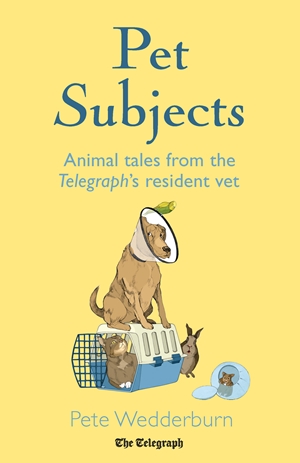
Book #14 – Pet Subjects

Prompt – An Anthology

Medium – Book

About the Book – This book has been written by Irish vet Pete Wedderburn, who is the resident vet for the Telegraph. He discusses some of the rare or strange cases he has come up against, alongside advice for people with animals suffering similar ailments. He looks at a range of creatures, from big, beefy cats, to dogs with cancer, to a giant tortoise. Every animal is treated with care, and the book takes on a ‘House’ feel, as the author details the process that he goes through to find out the cause and nature of illnesses.

My Rating – 5/10. I picked this book up as light relief for the other book I am reading/listening to at the moment which I hit a slight wall with, hence the delay in posting about the next book. I enjoyed the lay-out of this book in short stories rather than long chapters, which made the book easy to digest in a few sittings. I liked the letters at the end of each chapter, which were helpful to see the different ways that you could ‘treat’ your animals at home.

I think the main problem about this book was that it went against what I was expecting – maybe teaching me to have no preconceived notions about a book! I am a sucker for ‘real life profession’ stories (i.e. vets – James Herriott, schools – Gervase Phinn, hospitals – Adam Kay) and expected this to be similar – a mix of sad and funny stories. Instead, the tone was mostly a little depressing and the vet, though obviously a really nice guy, didn’t necessarily write in a way that particularly endeared. I was more interested by the letters to pet-owners at the end of each chapter, which were more humorous and seemed to tell more of a story.

Would I read it again? I don’t know. I will keep it for a while, and then maybe have another read in the future!

Book #13 – The Curious Incident of the Dog in the Night-time

Prompt – A book with an upside-down picture on the cover.

Medium – Audiobook (I have loads of Audible credits and want to use them up!)

About the book – Written by Mark Haddon, this book is written from the perspective of Christopher Boone, who is a young man on the ASD Spectrum (although a diagnosis is never stated in the book). Christopher is a extremely intelligent young man, with a love of maths and detective novels and who sees everything – he is phenomenally observant and is able to think about things in ways that other people can’t or don’t. Outside his house one day, he finds that his next-door neighbour’s dog, Wellington, has been killed with a pitchfork. He decides that he is going to solve the mystery of who killed the dog, just like his hero, Sherlock Holmes. His dad really doesn’t want him to, and whilst finding evidence to solve the mystery, Christopher finds out more information about his life than he is expecting to.

My Rating – 6/10. There are plenty of positive things about this book – I really enjoyed the layout of the book, the use of prime numbers for the chapters and the slightly unreliable narrator. It gave a real insight into the mindset of a person with ASD, although it is worth saying that ASD being a spectrum condition, this will not be how everyone thinks and feels – there are differences caused by severity, gender and in the way that the person has grown up and been nurtured. The ‘mystery’ within the book soon plays second fiddle to the storyline based around the character’s home life, so be aware of that if you are looking for a mystery novel!

I think any book which highlights the very different and extraordinary way that someone with Autism thinks is great – but for me, the amount of bad language spoiled my enjoyment and engagement in the book. I’m not a massive prude, but I think the sheer amount of language could have been cut down – although there is a children’s version of the book, so that might have been better for my poor, innocent self. There were also a few more mentions of poo, wee and vomit in the book than I was expecting!

Would I read/listen to it again? Probably not. I didn’t find it massively enjoyable (controversial, I know), but appreciate it as a introduction to people about what might be going on in a neurodiverse brain.

Design a site like this with WordPress.com
Get started